
Supreme Court Blocks Planned Parenthood’s Challenge To South Carolina Medicaid Exclusion
High Court Sides with State in Medicaid Dispute, Limiting Provider Challenges
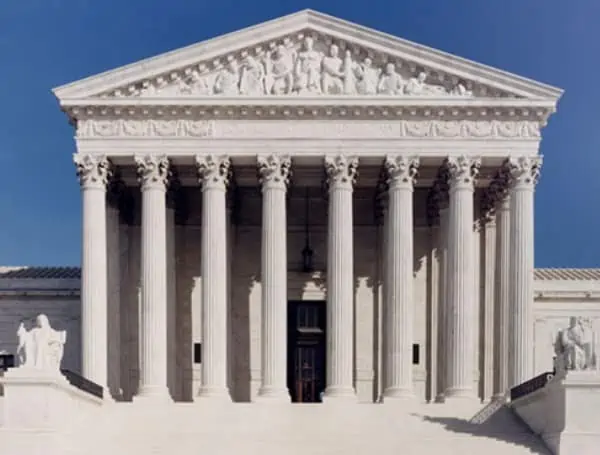
The Supreme Court on Thursday rejected Planned Parenthood’s attempt to reverse its exclusion from South Carolina’s Medicaid program, a decision that has significant implications for both abortion providers and the future of Medicaid enforcement. The ruling upholds South Carolina’s 2018 decision to bar Planned Parenthood from participating in its Medicaid program.
Planned Parenthood had argued that South Carolina’s action violated the “free-choice-of-provider” provision within the Medicaid Act, which generally allows patients to choose their healthcare providers. However, South Carolina countered that Planned Parenthood lacked the legal standing to sue to enforce this provision.
Justice Neil Gorsuch, writing for the majority, emphasized the balance between individual rights and the burden of private enforcement on states.
“At their best, individual suits under §1983 can vindicate plaintiffs’ rights while pushing States to fulfill their obligations,” Gorsuch wrote. “But private enforcement does not always benefit the public, not least because it requires States to divert money and attention away from social services and toward litigation. And balancing those costs and benefits poses a question of public policy that, under our system of government, only Congress may answer.”
The decision drew a sharp dissent from Justice Ketanji Brown Jackson, joined by Justices Sonia Sotomayor and Elena Kagan.
Justice Jackson warned that the ruling “is likely to result in tangible harm to real people.” She added, “At a minimum, it will deprive Medicaid recipients in South Carolina of their only meaningful way of enforcing a right that Congress has expressly granted to them. And, more concretely, it will strip those South Carolinians—and countless other Medicaid recipients around the country—of a deeply personal freedom: the ‘ability to decide who treats us at our most vulnerable.'”
The Supreme Court’s decision leaves the door open for Congress to address the scope of private enforcement under the Medicaid Act, while also potentially limiting the avenues for providers and patients to challenge state actions within the program.
The impact on Medicaid recipients in South Carolina and potentially other states remains a key concern for dissenting justices and advocates for patient choice.
MORE ARTICLES - TAMPA FREE PRESS
- Trump’s 2024 Victory Marked By Significant Shift Among Latino Voters: Analysis
- U.S. Department Of Education Eyes School Choice As Key To Turning Around Failing Schools
- U.S. Gas Prices Hit 4-Year Low As Mideast Ceasefire Holds Amid Trump’s Energy Push
- Florida Gov. DeSantis Declares War On ‘Woke’ Academia With New 6-State Accreditor
- Florida And Arkansas Lawmakers Champion Bill To Unlock Investment, Create Jobs Across U.S.
- Wisconsin Supreme Court Throws Wrench In Dems’ Plan For Taking Back House
- Minnesota Journalist Tells Tucker Carlson How Her Marriage To A Cop Cost Her TV Job
TAMPA FREE PRESS
Please make a small donation to the Tampa Free Press to help sustain independent journalism. Your contribution enables us to continue delivering high-quality, local, and national news coverage.
Android Users: Download our free app to stay up-to-date on the latest news.
Connect with us: Follow the Tampa Free Press on Facebook and Twitter for breaking news and updates.
Sign up: Subscribe to our free newsletter for a curated selection of top stories delivered straight to your inbox.