
Florida And Michigan Lawmakers Lead Bipartisan Push To Bar Federal Agencies From Adversarial AI
New Bipartisan Bill Seeks to Create a “Firewall” Against AI Controlled by Hostile Nations Like China
A strong bipartisan coalition in both the Senate and House of Representatives has introduced the “No Adversarial AI Act,” a piece of legislation aimed at preventing federal agencies from utilizing artificial intelligence technologies controlled by foreign adversaries, including the Chinese Communist Party (CCP).
The move comes amid growing concerns over data security and national security, particularly following reports that companies like DeepSeek have ties to the CCP and store U.S. user data in China.
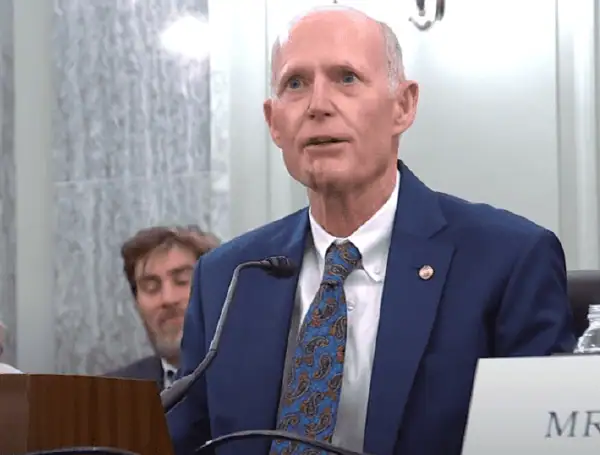
Senator Rick Scott (R-FL) spearheaded the bill in the Senate, joined by Senator Gary Peters (D-MI). In the House, the bipartisan effort is led by Congressmen John Moolenaar (R-MI), Raja Krishnamoorthi (D-IL), Darin LaHood (R-IL), and Ritchie Torres (D-NY), all members of the House Select Committee on the Chinese Communist Party (CCP).
Senator Scott emphasized the urgency of the legislation, stating, “The Communist Chinese regime will use any means necessary to spy, steal, and undermine the United States, and as AI technology advances, we must do more to protect our national security. With clear evidence that China can have access to U.S. user data on AI systems, it’s absolutely insane for our own federal agencies to be using these dangerous platforms and subject our government to Beijing’s control.” He asserted that the “No Adversarial AI Act” would “stop this direct threat to our national security and keep the American government’s sensitive data out of enemy hands.”
Senator Peters echoed these concerns, highlighting the dual nature of AI. “Artificial intelligence holds immense promise for our economy and society—but it also presents real security risks when leveraged by foreign adversaries,” he said. “This legislation helps safeguard U.S. government systems from AI developed by foreign adversaries that could compromise our national security or put Americans’ personal data at risk.”
“The CCP is weaponizing its most advanced firms, like DeepSeek, to train AI for the battlefield and embed it into the PLA’s warfighting arsenal,” Moolenaar stated. “The U.S. must draw a hard line: hostile AI systems have no business operating inside our government.”
The “No Adversarial AI Act” proposes several key provisions:
- Creation of a Federal List of Adversarial AI: The Federal Acquisition Security Council would be mandated to identify AI developed by foreign adversary companies (including those based in or controlled by China, Russia, Iran, and North Korea) and publish this list publicly.
- Prohibition of Federal Use: Executive agencies would be restricted from using artificial intelligence developed by entities on the adversarial list, specifically mentioning companies like DeepSeek due to their reported ties to the Chinese Communist Party.
- Limited Exceptions with Oversight: Exceptions for research, testing, or mission-critical functions would be permitted, but only with written justification and explicit notice to Congress and the Office of Management and Budget (OMB).
- Mandatory Regular Updates: The adversarial AI list would be required to be updated at least every 180 days to account for evolving threats and new technological developments.
- Empowerment of Agency Enforcement: Agencies would be directed to utilize existing authorities to exclude and remove covered AI products from federal systems.
This bipartisan legislative push signals a growing congressional consensus on the need to proactively protect U.S. national security in the rapidly evolving landscape of artificial intelligence.
MORE ARTICLES - TAMPA FREE PRESS
- Michigan Workers Advance Effort For Referendum On Wage Law
- High Court Backs Texas In Battle Over Online Porn Age Verification
- Supreme Court Punts On Louisiana Voting Rights Case, Setting Stage For New Arguments
- Kentucky Rep. Massie Rakes In Cash Despite Trump Wrath
- Former NBC Analyst Chuck Todd Lays Out Big ‘Problem’ Facing Democratic Party
- Kentucky, Utah, And Tennessee Senators Push For Accountability In Allied Defense Spending
- California Gov. Newsom Unleashes $787M Legal Bomb On Fox News: Citing Jesse Watters “Lie”
- Turrentine: Why Schumer And Jeffries Aren’t Backing Mamdani
- Naval Naming Shift: USNS Harvey Milk Renamed USNS Oscar V. Peterson
- Georgia Rep. MTG Unleashes Fury On Thune Over “Weak” Senate Leadership, War Powers Vote
- Megyn Kelly Guest Describes ‘Deranged’ Mindset That Led NYC Progressives To Socialist Nominee
TAMPA FREE PRESS
Please make a small donation to the Tampa Free Press to help sustain independent journalism. Your contribution enables us to continue delivering high-quality, local, and national news coverage.
Android Users: Download our free app to stay up-to-date on the latest news.
Connect with us: Follow the Tampa Free Press on Facebook and Twitter for breaking news and updates.
Sign up: Subscribe to our free newsletter for a curated selection of top stories delivered straight to your inbox.