
Saudi Pipeline Struck By Drones From Iraq, Threatening Key Oil Route
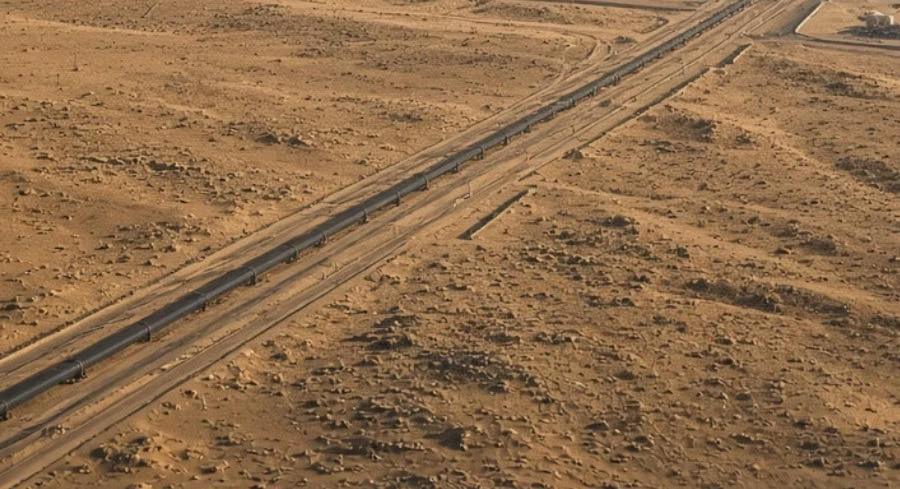
Drones launched from Iraq struck Saudi Arabia’s East-West pipeline, two U.S. officials told CNN, opening a new front of pressure on the kingdom just over six months into the regional conflict. Satellite images shared on social media platform X corroborated reports of the strike.
The attack targets an infrastructure route that has served as a key workaround for oil shipments avoiding the disrupted Strait of Hormuz.
While the specific group behind the strike has not been officially confirmed, the Institute for the Study of War noted that the drones likely originated from the Popular Mobilization Forces, an Iraqi militia network tied to Iran.
Officials told CNN it is “not immediately clear” how long pipeline repairs will take, leaving the full extent of the damage uncertain. Saudi Aramco, along with the Saudi and Iraqi embassies in Washington, did not immediately respond to requests for comment.
The incident compounds ongoing military pressure from Yemen’s Houthi rebels, who have carried out strikes against Saudi refineries, storage sites, and pipelines since July.
The Houthis began their naval campaign against Saudi-linked shipping on July 22 by hitting the oil tanker Encelia, causing the vessel to catch fire. The group has also seized control of Yemen’s coastline, including Mayun Island near the Bab el-Mandeb Strait, while declaring a blockade on Saudi vessels.
The East-West pipeline transports crude from oil fields in eastern Saudi Arabia across the country to Yanbu, a major export terminal on the Red Sea. Aramco CEO Amin Nasser previously described the pipeline as a “critical supply artery” that helped ease global energy supply shocks. The line operated at its full capacity of 7 million barrels per day during the first quarter of 2026.
Data from Vortexa cited by Reuters showed crude and condensate loadings from Yanbu reached about 3.7 million barrels per day in early September. The rerouted supply contributed to an increase in oil traffic through the Bab el-Mandeb Strait, rising from 5.4 million barrels per day in late 2025 to 8.1 million barrels per day in the second quarter of 2026, according to the U.S. Energy Information Administration.
Despite these diversions, overall Saudi output has declined. International Energy Agency figures show Saudi crude supply fell by 2.3 million barrels per day in August to around 6 million barrels per day, marking its lowest level in over 30 years. The agency also lowered its full-year Saudi supply forecast by 885,000 barrels per day.
In response to the Houthi advances, the U.S. military has deployed over 100 advisers to Saudi Arabia to assist with targeting data for Saudi airstrikes, according to CNN reporting citing five sources.
The move follows earlier American military actions in the region. Between 2023 and 2025, Houthi forces attacked U.S. warships more than 170 times and commercial vessels 145 times, former Pentagon spokesman Sean Parnell stated in March 2025. The Pentagon conducted over 1,000 strikes against Houthi targets, including precision operations aimed at leadership in mid-March 2025, before an Oman-mediated agreement halted U.S. strikes that May.