
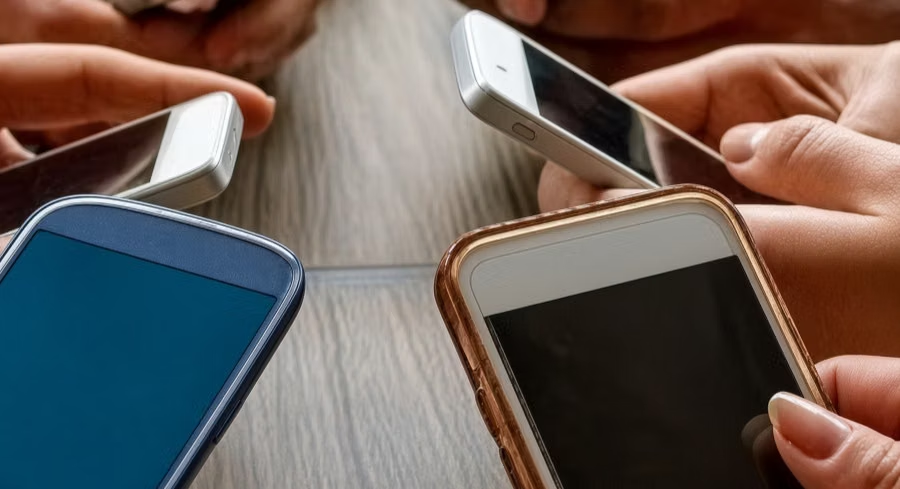
Your Phone, Their Rules? Supreme Court Urged To Stop Border Device Searches
The American-Arab Anti-Discrimination Committee (ADC) filed a “friend of the court” brief with the U.S. Supreme Court on behalf of journalist Max Blumenthal, asking the justices to take up the case Anibowei v. Blanche and establish clear national rules for border searches of electronic devices.
In the brief, the ADC asks the Court to settle disagreements among federal appeals courts over when federal agents can search travelers’ phones and computers at ports of entry.
Currently, Fourth Amendment protections for digital devices vary depending on where a traveler enters the United States. In the Fourth and Ninth Circuits, border officers can manually search a traveler’s phone without suspicion, but they need “reasonable suspicion” to run advanced forensic searches using external equipment.
In contrast, the Fifth Circuit allows searches of electronic devices without requiring individualized suspicion of a crime.
U.S. Customs and Border Protection also uses its own internal directive to conduct searches of travelers’ electronics, which the ADC describes as creating a “chaotic and unpredictable situation for travelers.”
 Court (File)
“The Constitution cannot mean one thing when an American lands in California and something entirely different when she lands in Texas,” said Jenin Younes, ADC President and Legal Director. “Moreover, federal agencies do not get to decide what the Fourth Amendment allows. Our phones contain our most private information, and can allow someone accessing it to obtain a virtual roadmap into our minds when they look through our search queries, messages, location data, and more.”
The filing cites the Supreme Court’s ruling in Riley v. California, which established that police generally need a warrant to search an arrested person’s smartphone due to the vast amount of private data stored on modern devices. The ADC argues that lower courts have not properly applied this standard to border crossings, leaving journalists, whistleblowers, and travelers vulnerable to arbitrary device seizures.
Blumenthal, who has a separate ongoing federal lawsuit challenging the seizure of his phones, said he joined the legal effort after federal agents stopped him at an airport and took his devices.
“When I was sent to secondary screening at Dulles Intl. airport, after being targeted for days by allies of the Trump administration for my journalism and my views, I was told that I did not have the same rights I enjoyed outside the airport. My phones were then confiscated without a warrant or suspicion of any crime,” Blumenthal said. “I’m filing this amicus brief because the Supreme Court needs to address this issue and stop the arbitrary violations of constitutional rights to privacy and press freedom that I experienced at the hands of my government. And I’m doing so to ensure that these rights are applied evenly across the land, at our borders and in every state.”
The ADC is urging the high court to grant review in Anibowei v. Blanche to clarify constitutional protections under the First and Fourth Amendments for all travelers entering the country.