

Can Your Gun Permit Cross State Lines? Supreme Court Urged To Settle The Issue
Several prominent gun rights organizations have asked the U.S. Supreme Court to take up a case challenging state-level restrictions on out-of-state concealed-carry permits.
The Second Amendment Foundation (SAF) filed an amicus brief in Johnson v. Jacobson, urging the high court to rule that states must recognize valid carry permits issued elsewhere in the country.
The brief was joined by the National Rifle Association, the California Rifle and Pistol Association, the Second Amendment Law Center, the Minnesota Gun Owners Caucus, and the Citizens Committee for the Right to Keep and Bear Arms.
The lawsuit centers on Minnesota’s policy of not recognizing concealed-carry permits from other states. The plaintiff, a long-haul truck driver named Johnson who holds carry permits in Florida and Georgia, cannot legally carry a firearm in Minnesota without securing a separate in-state permit. The Eighth U.S. Circuit Court of Appeals previously upheld Minnesota’s requirement.
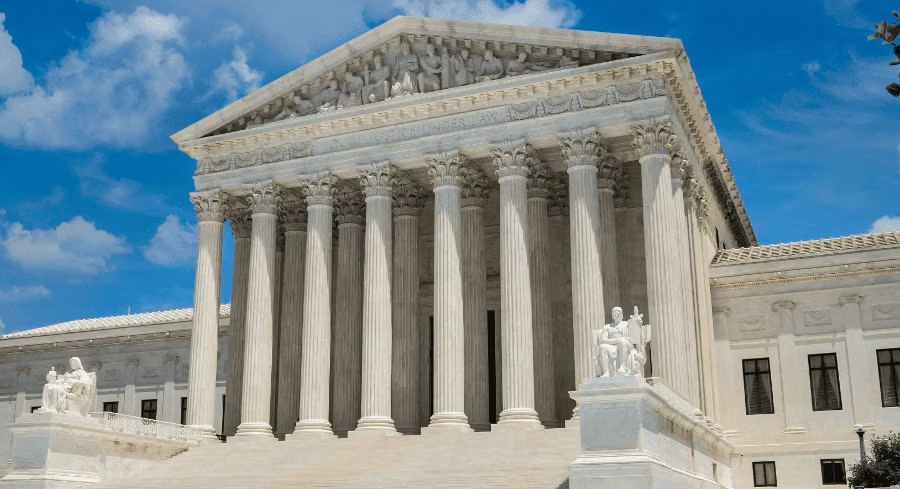
In their filing, the groups argue that the Second Amendment right to carry firearms in public for self-defense applies nationally and should not require navigating separate licensing systems across state lines. The brief cites historical “traveler’s exception” laws from the colonial era through the 19th century, which often exempted visitors from local concealed-carry bans, and argues that this history supports overturning the Eighth Circuit’s decision.
“The right to carry does not stop at state lines,” said Kostas Moros, SAF director of legal research and education and counsel of record on the brief. “A truck driver who already holds permits from Florida and Georgia should not have to fly to Minnesota, appear in person at a sheriff’s office, pay another set of fees and complete another training course just to exercise the same constitutional right he already has. Our historical tradition offered travelers more leeway than residents when it came to the right to carry. Minnesota’s scheme turns that tradition on its head.”
The brief also highlights the financial and logistical hurdles created by differing state rules. According to the filing, California nonresident permits can cost between $500 and $2,000 and take months or years to process, while some states bar nonresident applications entirely. It also notes an example of one couple spending over $12,800 to obtain permits covering 46 states and Washington, D.C.
Additionally, the groups point to permit-holder compliance rates, noting that Florida has revoked just 0.36% of the more than 6.6 million permits it has issued since 1987.
“Americans should not need a stack of state licenses and thousands of dollars to exercise a constitutional right just because they cross an imaginary line,” said Alan M. Gottlieb, SAF founder and executive vice president. “The Supreme Court should grant this petition and make clear that shall-issue permitting, even if a state may require it of its own residents, does not authorize a state to ignore the permits of every other state.”