
Supreme Court Asked To Halt CPSC Chaos After Commissioners’ Reinstatement
High Stakes Showdown: Trump Challenges CPSC Reinstatement at Supreme Court
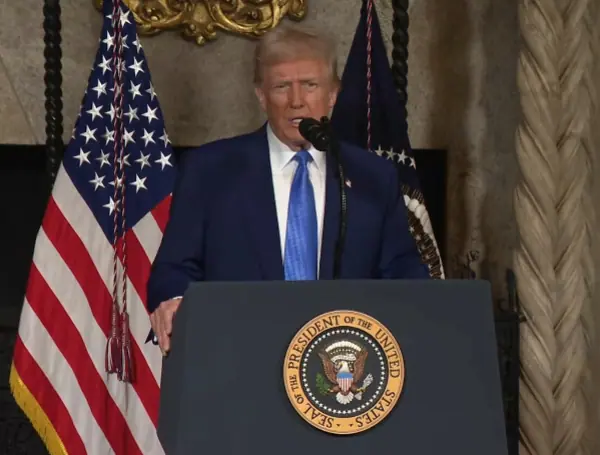
The Supreme Court of the United States is facing an urgent plea to intervene in a tumultuous dispute surrounding President Donald J. Trump’s removal of three Consumer Product Safety Commission (CPSC) members. The Solicitor General, D. John Sauer, has filed an application to stay a Maryland District Court’s judgment that reinstated the commissioners, arguing that the decision has plunged the agency into “chaos and dysfunction.”
The filing, submitted on behalf of President Trump and other executive officials, seeks an immediate administrative stay and a stay pending appeal to the Fourth Circuit, along with a request for the Supreme Court to grant certiorari before judgment. The core of the government’s argument rests on the President’s Article II powers to remove executive officers at will and challenges the lower court’s authority to order reinstatement.
The conflict began in May 2025 when President Trump removed CPSC Commissioners Mary Boyle, Alexander Hoehn-Saric, and Richard Trumka Jr., all appointed by President Biden. The District Court for the District of Maryland, however, countered the President’s decision on June 13, 2025, ordering their reinstatement. The court cited the CPSC’s statutory protection from at-will removal, classifying it as a “traditional multimember independent agency” with quasi-judicial and quasi-legislative functions, thereby falling under the Humphrey’s Executor v. United States precedent.
The government contends that this interpretation is a misreading of recent Supreme Court rulings, particularly Trump v. Wilcox (2025). In Wilcox, the Supreme Court stayed injunctions reinstating members of the National Labor Relations Board (NLRB) and Merit Systems Protection Board (MSPB), finding the government likely to succeed on the merits because those agencies exercise “considerable executive power.”
The Solicitor General’s application asserts that the CPSC, like the NLRB and MSPB, wields substantial executive authority through its rulemaking, adjudicatory, investigative, and enforcement powers, including the ability to prosecute criminal cases. This, the government argues, places the CPSC outside the narrow exception carved out by Humphrey’s Executor, making its commissioners subject to presidential removal at will.
The immediate aftermath of the district court’s reinstatement order has, according to the government, been highly disruptive. The three reinstated commissioners, now forming a majority on the five-member CPSC, allegedly moved swiftly to undo actions taken since their removal. This included annulling nearly all votes taken by the CPSC, reinstating a withdrawn proposed rulemaking, and even firing staff hired to facilitate compliance with a Trump administration executive order on government efficiency.
One reinstated commissioner is reported to have threatened agency staff, stating, “If you chose to ignore the directive of the Commission, I suggest you read the [district court’s] order and decide whether you want to personally violate it.” This has, according to the filing, put agency staff in an “untenable position” and thrown the CPSC into disarray.
Despite the government’s appeal to the Fourth Circuit and a request for an administrative stay, the Fourth Circuit denied the motion in a one-sentence order on July 1, 2025. Judge Wynn, in a concurrence, argued that Wilcox did not necessitate a stay as it was “not a ruling on the merits.”
The Solicitor General argues that the lower courts’ refusal to stay the judgment directly conflicts with the binding precedent on stay factors set by Wilcox. The application highlights that other district courts have similarly refused to stay reinstatement orders for removed executive officers at other agencies, necessitating the Supreme Court’s intervention to prevent lower courts from treating Wilcox as a one-time ruling.
Beyond the immediate stay, the government is also asking the Supreme Court to consider the application as a petition for a writ of certiorari before judgment. This would allow the high court to bypass the traditional appellate process and directly review two critical questions:
- Whether the CPSC’s statutory provision protecting its members from at-will presidential removal violates the separation of powers.
- Whether the district court’s order restoring the commissioners to office exceeded its remedial authority.
The government asserts that the proliferation of similar lawsuits challenging presidential removal power across multiple agencies since Wilcox makes the need for a definitive ruling from the Supreme Court even more urgent to end the current “disruption” and “uncertainty.”
The Supreme Court’s decision on this application will have significant implications not only for the CPSC but for the broader landscape of executive power and the independence of federal agencies.
MORE ARTICLES - TAMPA FREE PRESS
- California’s “Draconian” Environmental Law Gets Tweaks, But Critics Say Bureaucracy Remains
- Nancy Grace Erupts Over Prosecution Leaving Idaho Victims’ Families ‘Out Of The Equation’
- California Leads 20 States Suing Trump Admin Over Sharing Medicaid Data With DHS
- Appeals Court Sides With Florida In Pronoun Battle With Hillsborough County Trans Teacher
- Political Heavyweights Sound Alarm As NYC Mayoral Nominee’s “Extreme” Views Jolt Dem Establishment
- Columbia University’s Accreditation Jeopardized Amid Ethics And Integrity Concerns
- Victor Davis Hanson Challenges Zohran Mamdani’s “Whiter Neighborhood” Tax Plan
- FBI Ditches ‘Moth-Eaten’ Hoover HQ For Reagan Building After USAID Vacates
- Big Apple Socialism: Too Hot For Kansas?
TAMPA FREE PRESS
Please make a small donation to the Tampa Free Press to help sustain independent journalism. Your contribution enables us to continue delivering high-quality, local, and national news coverage.
Android Users: Download our free app to stay up-to-date on the latest news.
Connect with us: Follow the Tampa Free Press on Facebook and Twitter for breaking news and updates.
Sign up: Subscribe to our free newsletter for a curated selection of top stories delivered straight to your inbox.