
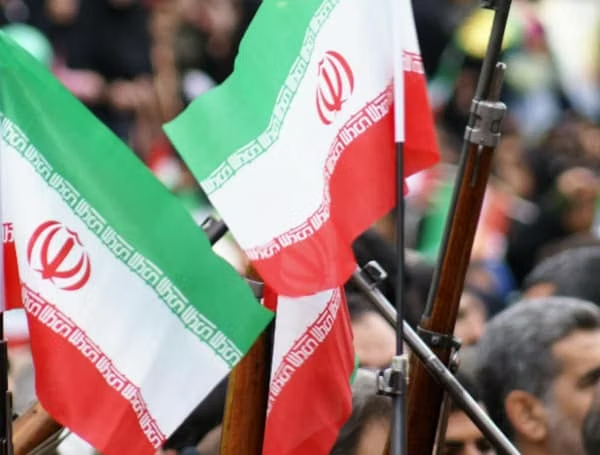
Mines, Hacked Fridges, And Defiance: Iran Vows It Won’t Yield A “Single Particle” Of Uranium
The eight-month conflict between Iran and the Western coalition showed no signs of cooling Wednesday, as Tehran flatly rejected U.S. peace terms while explosions rocked the Strait of Hormuz and diplomatic barbs flew across the globe.
In a broadcast carried by state television, Mohsen Rezaei, secretary of Iran’s Supreme National Security Council, drew an unyielding line on the core issue driving the war: its nuclear stockpiles. Tehran, he declared, “will not remove even a single particle of enriched nuclear material from the country.”
The statement delivers a sharp blow to U.S. hopes for an off-ramp. President Trump launched military operations citing the urgent need to prevent Iran from assembling a nuclear warhead—an intent Tehran has consistently denied. Washington wants any viable cease-fire to strip the Islamic Republic of its enriched uranium entirely. On Tuesday, Defense Secretary Pete Hegseth doubled down on that objective, telling reporters that “crazy Islamists in Tehran will never ever have a nuclear weapon.”
Yet Iran maintains that diplomatic bargaining cannot begin until military strikes cease on all fronts, including in Lebanon.
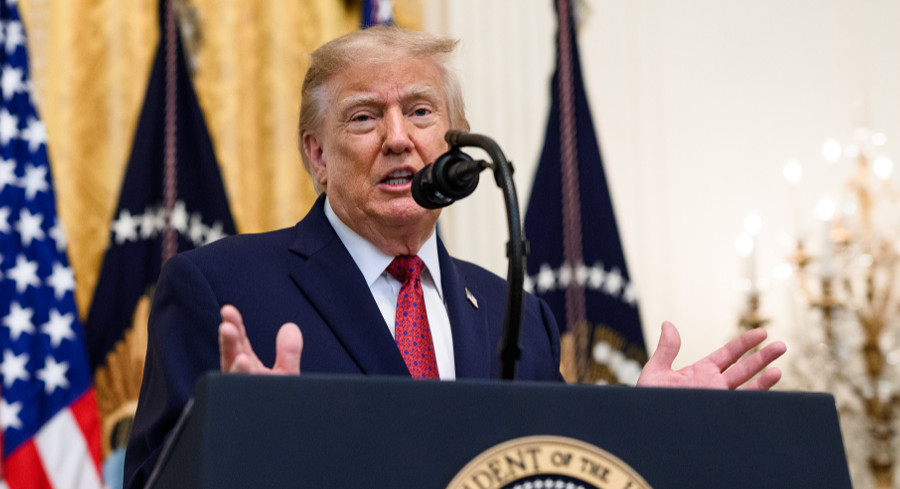
President Donald J. Trump makes remarks at a Hispanic Heritage Month Celebration in the East Room, Wednesday, September 30, 2026, at the White House. (Official White House Photo by Joyce Boghosian)
Beyond the diplomatic standoff, the war’s physical and financial footprint is deepening across the Middle East. Allianz Trade published a report Wednesday placing physical destruction across Persian Gulf economies at more than $200 billion, with critical energy hubs in Bahrain, Qatar, and Kuwait bearing the brunt. The insurer warned that knocked-out infrastructure, crippled tourism, and stalled investment could siphon a staggering $790 billion from regional growth by 2030.
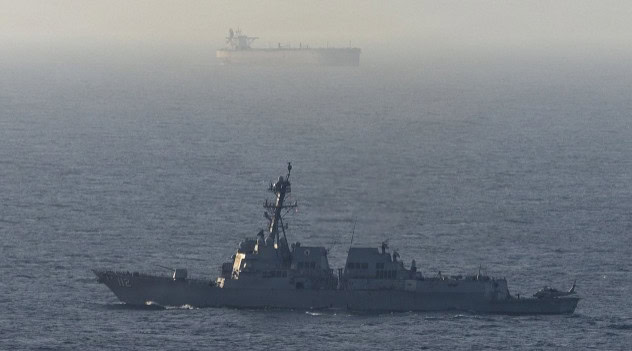
That instability was on full display in the waters off the southern Iranian coast. The Islamic Revolutionary Guard Corps announced Wednesday that two oil tankers struck naval mines and burst into flames inside the strategic Strait of Hormuz. Iranian forces claimed the ships were attempting a clandestine transit through an unauthorized channel under the escort of U.S. fighter jets. The incident followed a separate strike reported Tuesday night by the U.K. Maritime Trade Operations, in which a tanker took a direct hit from a projectile.
The friction is also spilling thousands of miles from the battlefield through shadowy skirmishes and cyber warfare.
Mohammad Mokhber, an adviser to Iran’s supreme leader, warned on social media that Western nations enforcing the maritime blockade against Iranian ports are engaging in direct acts of war, writing that the U.S. and Europe “have heard the repercussions.”
European capitals argue those repercussions have already taken bizarre and destructive turns. French prosecutors tied Tehran to an October cyberattack that hijacked thermostats in commercial refrigeration units at 700 supermarkets nationwide, ruining tons of food inventory and sparking roughly 20 electrical fires.
Iranian Foreign Ministry
Iranian Foreign Minister Abbas Araghchi scoffed at the accusation online, ridiculing French authorities as “unable to manage fridges let alone addressing grievances of its people” and accusing Paris of using Tehran as a scapegoat for domestic troubles.
With shipping corridors burning, cyber operations hitting civilian infrastructure, and both capitals refusing to budge on the nuclear question, the path toward a cease-fire remains as narrow as ever.