
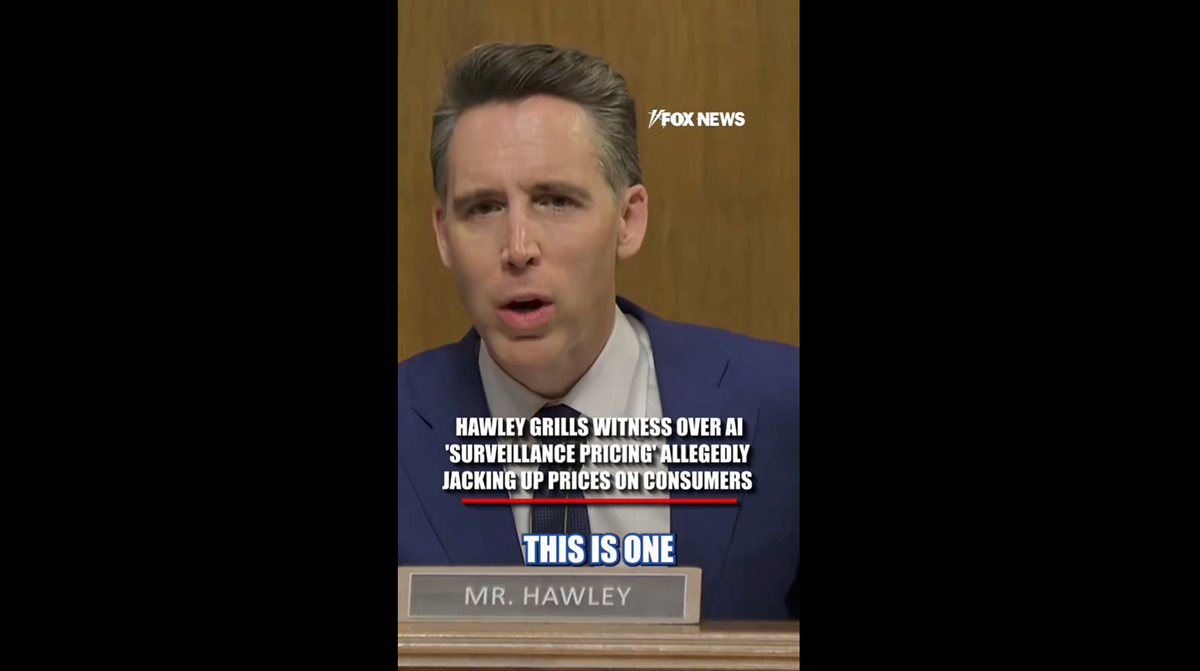
JetBlue “surveillance pricing” exposed in Congressional Hearing
X Post
Wall Street Apes
WOW
Airlines in America are using “surveillance pricing” CONFIRMED
One JetBlue customer had the price of their plane ticket double in one day because the data the airline collected showed they were flying for a funeral
“This is one of the biggest scams in American history. Do you think that it would be fine to double or triple the price of an airline ticket for someone flying to a funeral?
There was a disturbing incident that played out on X, that shed some light, I think, on how airlines are using surveillance pricing in real time right in front of us. I think I've got the relevant exchange over my shoulder here. (SEE VIDEO IT’S WILD)
“$230 price increase. They're gonna figure out how they can rip you off one person at a time. They're not gonna charge you the same fare they charge your neighbor. They're not gonna charge you the same fare as the guy sitting next to you in the seat. They're gonna figure out how they can bilk you out of every dime they're willing to pay every time you step on an airline”
“It's gonna be the grocery stores and everybody else until we figure out how to bring transparency, how to bring honesty and some protections for the American consumer”
“This is one of the biggest scams in American history”
I went and found the original post and can confirm JetBlue is trying to hide that they are using surveillance pricing because they deleted their comment. The evidence was deleted
Articles
- New York Post covered the deleted reply, the customer’s funeral-related complaint, JetBlue’s denial, and the resulting accusations of surveillance pricing (adjusting prices via personal data).
- Fox News reported on the subsequent lawsuit claims that JetBlue tracked browsing/behavior to adjust fares in real time (including cases where a user left and returned to higher prices).
- The Epoch Times reported the lawsuit and noted that while “surveillance pricing” (tailoring prices to estimated willingness to pay) is not illegal in the U.S., issues around consent and data collection remain.