
DOJ Legal Opinion Finds Federal Ban On Handgun Sales To 18-To-20-Year-Olds Unconstitutional
The Justice Department’s Office of Legal Counsel has concluded that federal laws barring licensed gun dealers from selling handguns to adults aged 18 to 20 violate the Second Amendment, according to a formal legal opinion issued to the Attorney General.
In the slip opinion dated September 17, 2026, Assistant Attorney General T. Elliot Gaiser wrote that sections 922(b)(1) and (c)(1) of Title 18 of the U.S. Code cannot be lawfully enforced against licensed dealers selling handguns to law-abiding young adults in that age group. Under the existing statutory framework originally established by the Gun Control Act of 1968, federally licensed importers, manufacturers, and dealers face felony penalties and up to five years in prison for selling handguns or handgun ammunition to individuals under the age of 21.
The memorandum evaluated the statute under the Supreme Court’s two-step Second Amendment test outlined in New York State Rifle & Pistol Ass’n v. Bruen and clarified in subsequent rulings. The first step requires assessing whether the plain text of the Second Amendment covers the conduct at issue.
The opinion determined that 18-to-20-year-olds qualify as part of “the people” protected by the Constitution, noting that the Second Amendment contains no explicit age limits like those found in the Qualifications Clauses for members of Congress or the presidency. The memo also pointed out that contemporary laws deem an 18-year-old “mature enough to be drafted, vote, serve as a juror, and be sentenced to death,” and that the Twenty-Sixth Amendment firmly established 18 as the national age of full political membership. Furthermore, the opinion found that the right to keep and bear handguns—the most common self-defense weapon in the country—necessarily includes the right to purchase them.
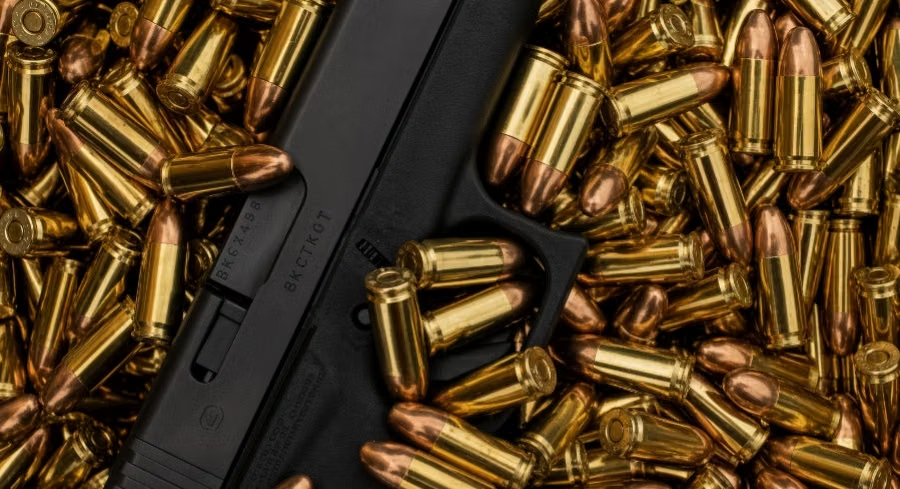
Handgun (Source: Unsplash)
Because the ban falls within the Amendment’s text, the burden shifted to the government to show the restriction fits within the nation’s historical tradition of firearm regulation. The opinion concluded that the government cannot meet that burden.
Reviewing early American history, the OLC found no Founding-era prohibitions on young adults buying weapons. Instead, historical militia laws routinely required males starting at age 18 to enroll and provide their own firearms, including under the federal Militia Act of 1792.
The opinion examined and rejected several proposed historical analogues, including common-law contract rules that allowed minors under 21 to void commercial agreements. The OLC concluded that those contract rules were civil doctrines designed to protect young people from unfair deals, unlike a modern criminal statute aimed at public safety. Similarly, the memo noted that state laws barring gun sales to minors did not appear until the mid-to-late 19th century, were largely focused on legal dependents under parental authority, and arrived too long after 1791 to establish an early constitutional tradition. Early university campus weapon bans were also deemed inapplicable because they governed school property rather than society at large.
The memorandum acknowledged conflicting rulings among federal appeals courts regarding firearm age limits, but asserted that decisions upholding the bans fail to align with recent Supreme Court precedent.
The OLC emphasized that its conclusion applies narrowly to the purchase of handguns by individuals between 18 and 20. The opinion noted that it does not affect federal prohibitions on handgun possession by juveniles under 18, background check procedures, age-neutral commercial sales rules, or restrictions regarding other categories of firearms and prohibited persons under federal law.