
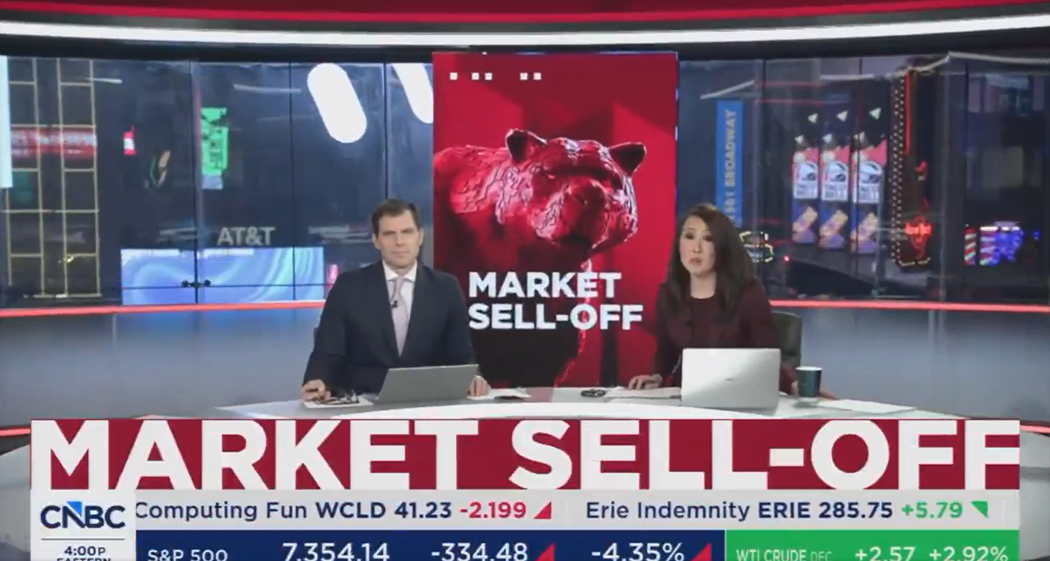
US stocks down big only two days after Democrats win the midterms
X Post
Nick Sortor
BREAKING: US stocks have just taken a HISTORIC nosedive after Democrats' blue wave this week, with TRILLIONS of dollars being incinerated in a single day
Democrats are already doing SEVERE damage to American retirement accounts.
Travel, tech, retail, energy, manufacturing stocks, and more: ALL SHARPLY down today
NASDAQ down over 5.5%
Grok Assessment
The market has been choppy and lower since mid-August, with a clear peak in early October followed by a pullback that accelerated sharply today (Nov 5). The S&P 500 is now roughly 4–6% below its early-October highs and modestly below late-August levels, while the Nasdaq has entered a correction (more than 10% below its Oct 6 high). Politics and the midterms are a meaningful part of the story—especially the last two days—but not the only driver.
Recent Trend (mid-August through now)
- August: Positive. S&P 500 gained roughly 2.6–2.7% and closed near ~7,686. Broader gains occurred amid strong earnings and AI/tech leadership, though breadth was mixed and oil/geopolitical issues were present.
- September–early October: Roughly flat to modestly lower into late September (~7,652), then a push to a record close around Oct 6 (~7,819 for the S&P; Nasdaq near ~27,600).
- Mid-to-late October: Fade. S&P ended October at ~7,580 (down ~0.9% for the month and ~3% from the early-month high). Tech/AI names showed increasing strain.
- Early November / post-midterms: Brief relief rally on Nov 4 (S&P +~1.6%, Dow +~3%—its best post-midterm day in decades) on the clarity of a Democratic sweep of Congress and expectations of gridlock (with Trump still in the White House). Then a sharp reverse today: S&P down ~4.4% to ~7,354, Nasdaq down ~5.5% to ~24,315 (officially in correction, ~12% below the Oct 6 high), Dow down ~3.4–4.5%. This matches the numbers in the Nick Sortor post.
Year-to-date the S&P remains positive (low-to-mid single digits from the end-2025 close near 6,845), but the recent stretch has erased the early-October gains and more in tech-heavy indexes.
What’s Driving It (and the role of politics/midterms)
Multiple overlapping factors:
Fundamental / non-political pressures (building since summer/fall):
- Higher oil prices and sticky inflation linked to the Iran war, which has supported higher Treasury yields and market pricing for possible further Fed rate hikes.
- Growing skepticism about the AI trade: massive hyperscaler capex and debt issuance for data centers, questions about near-term returns on investment, crowded positioning, and some mixed/weak earnings or guidance in semiconductors and related names. Tech already faced pressure in October before the election results were known.
- Typical seasonal softness in midterm years (historically, markets often struggle from August through Election Day).
Political / midterm overlay:
- Pre-election uncertainty contributed to the soft August–October period (standard pattern in midterm years).
- Post-election sequence was two-step: an initial “certainty + gridlock is usually good for stocks + lower oil on reduced escalation hopes” rally on Wednesday, followed by today’s sharp sell-off. The dominant narrative for the drop is fear that the Democratic congressional majority plus state/local wins by candidates who campaigned against rapid data-center growth will slow AI infrastructure buildout via regulation, permitting delays, power-cost concerns, or local opposition. Chipmakers (Nvidia, AMD, Micron, etc.) and AI-linked names led the decline.
Democrats are not yet sworn in (that happens in January), so this is forward-looking policy risk rather than immediate legislation. The election appears to have acted as a catalyst that accelerated an unwind of an already-crowded, leveraged AI trade that had been showing cracks. Gridlock itself is historically not a major negative for markets, and post-midterm periods have on average delivered strong gains over the following 6–12 months as uncertainty falls—though the AI-specific regulatory angle is a unique overlay this cycle.
In short: the multi-month trend is a mix of rate/oil/AI-valuation concerns plus ordinary pre-midterm seasonality, with politics (especially the specific implications for data centers and AI spending) providing a clear catalyst for the sharp move lower in the last session. The longer-term post-midterm historical pattern is constructive, but near-term volatility around AI policy and rates remains elevated.
Sources
- Fox Business – Trump blames Democrat midterm wins for stock market drop and 401(k)s:
https://www.foxbusiness.com/politics/trump-blames-democrats-stock-market-plunge-after-sweeping-midterm-victories - Fox Business – Experts break down AI stock sell-off and Wall Street’s biggest concerns:
https://www.foxbusiness.com/markets/whats-fueling-wall-streets-growing-concerns-about-ai - Fox Business – Stock market plunge: What it means for your 401(k) retirement savings:
https://www.foxbusiness.com/economy/wall-street-stocks-tech-sell-off-november-5-2026 - The Epoch Times – Nasdaq Plunges Into Correction Territory, Dow Drops More Than 1,800 Points:
https://www.theepochtimes.com/business/nasdaq-plunges-into-correction-territory-as-wall-street-dumps-tech-stocks-6118589 - New York Post – Wall Street sees biggest market cap drops ever after midterm bloodbath for GOP:
https://nypost.com/2026/11/05/business/stunning-losses-on-wall-street-as-sp-500-nasdaq-see-biggest-market-cap-drops-ever-in-wake-of-midterms