
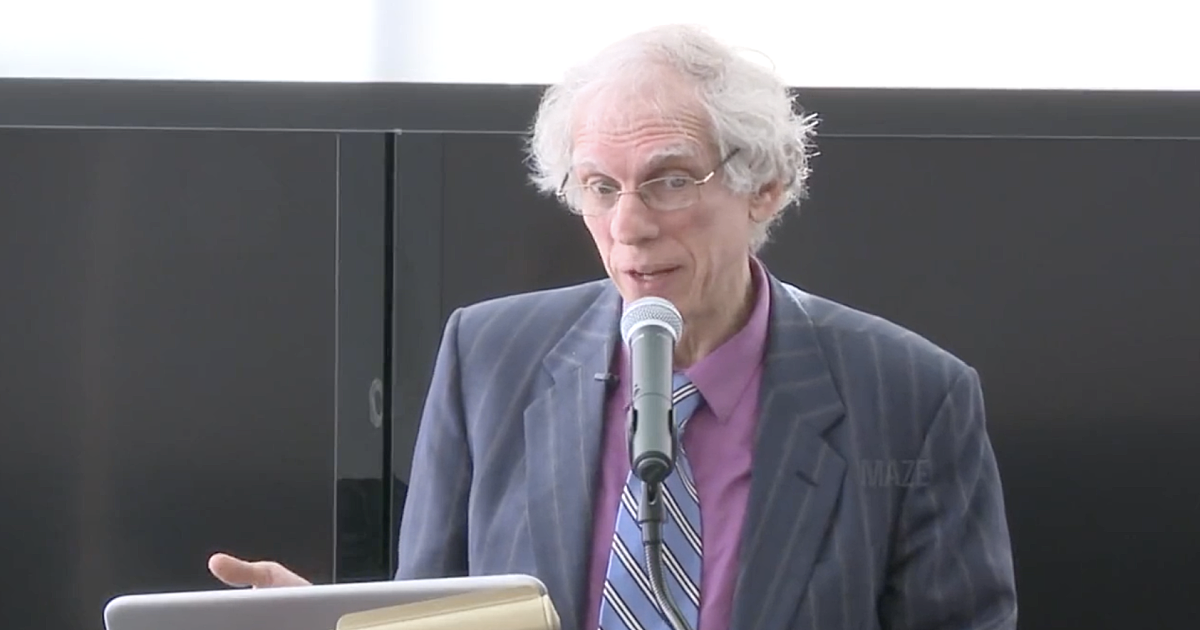
TRUMP JUDGE: “I can overrule the decision of the jury”
From WLT Report
Article By Noah, Original Publish Date: October 3, 2023
Is this even legal?
Constitutional?
Ethical?
Fair?
Look, I’m no Harvard Law Scholar, but I seem to recall we have a right as American Citizens to a Trial By Jury.
That would be the 6th Amendment (criminal cases) and 7th Amendment (civil cases) I do believe.
Do I have that correct?
So if we have those rights, are they really still rights if the Judge can just override the decision of the jury and submit his own opinion instead?
Say, hypothetically of course, crazy example….say you have a jury that were to rule in favor of a rich businessman, like say Donald Trump for example.
Then say you’ve got a Far-Left ultra-Dem, Trump-hater Judge who says “sorry! I am overriding that jury verdict and changing it to what I think is better!”
Is that legal?
The actual Judge in the current New York City “fraud” trial against Donald Trump says that’s EXACTLY what he can do.
Here he is in his own words:
Trump Judge: If juries get it wrong, I can overrule them based on my emotions about the case pic.twitter.com/EKLUzNZYL4
— Jack Poso (@JackPosobiec) October 3, 2023
Backup here:
TRUMP CASE JUDGE — in his own words….
Is this even legal?
"If juries get it wrong, I can overrule them based on my emotions about the case" pic.twitter.com/vIYfyT9b6Q
— DailyNoah.com (@DailyNoahNews) October 3, 2023
Here’s what ChatGPT has to say about it:
A “Judgment Notwithstanding the Verdict” (JNOV) is a legal action that a judge can take in a trial by jury. Also known as “nonsuit” in some jurisdictions, JNOV allows a judge to set aside a jury’s verdict and enter a different decision. The terminology might differ based on jurisdiction, and it may also be called “judgment non obstante veredicto.”
How does it work? After the jury has issued its verdict, if one party believes that no reasonable jury could have come to that decision based on the evidence presented, they can move for a JNOV. If the judge agrees, the judge will set aside the jury’s verdict and replace it with their own. This is typically done in instances where the judge believes that the verdict is not supported by the evidence or is contrary to the law.
In what cases would it be unconstitutional? The use of JNOV can be seen as infringing on the Seventh Amendment of the U.S. Constitution, which provides the right to a trial by jury in certain civil cases. In particular, it could be viewed as infringing on the right to a jury trial if a judge arbitrarily or without substantial justification overturns a jury’s verdict.
The JNOV would be considered unconstitutional in situations where:
- The Right to Jury Trial is Violated: JNOV cannot be used to totally nullify the role of the jury. If the evidence could reasonably support the jury’s verdict, a JNOV would be inappropriate. Overturning a verdict simply because the judge disagrees with the jury’s assessment of the evidence would likely be unconstitutional.
- Reexamination Clause Violation: The Seventh Amendment states, “no fact tried by a jury, shall be otherwise reexamined in any Court of the United States, than according to the rules of the common law.” This suggests that JNOV must be used in a manner consistent with historical and common-law practices. A misuse that contravenes these principles would be unconstitutional.
- Due Process Violation: If JNOV is used in a manner that is arbitrary or capricious, it could be challenged on due process grounds. Parties in a legal proceeding have a constitutional right to fair procedures.
That said, if used appropriately and in line with established legal principles, JNOV is a constitutional tool available to judges to ensure that verdicts are consistent with the evidence and the law.
Got any legal scholars out there?
Care to leave a comment below and let me know about this?
Thanks!
RELATED:
Read full article here.
WLT REPORT
If you love what we do, please consider a $1/month donation to keep us live! Thank you! DONATE