
Targeting The Source: U.S. And Ecuador Launch High-Stakes Military Strike On Drug Cartels
The United States has significantly escalated its regional campaign against organized crime by launching a joint military operation with Ecuadorian forces to dismantle drug trafficking networks. This move marks a shift from providing intelligence to active combat participation, signaling a new front in the administration’s efforts to curb the flow of narcotics from South America.
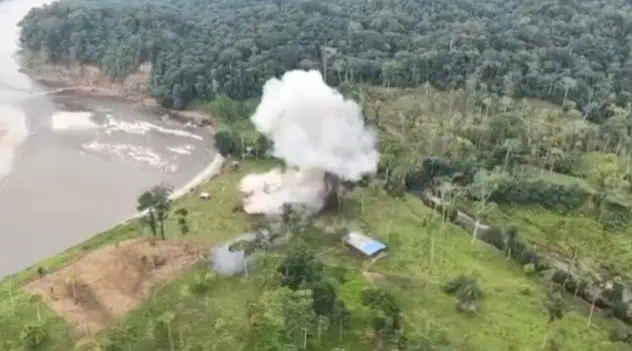
U.S. Special Forces utilized helicopters, boats, and drones in a coordinated strike near the Colombian border. Ecuadorian officials reported the successful destruction of a major drug camp, though local residents characterized the site as a farm.
The region has become a critical transit zone for “narco-terrorist organizations” where local gangs collaborate with Mexican cartels to move illicit goods. This partnership has transformed Ecuador into the world’s largest cocaine exporter and one of the most violent nations in South America, according to the FBI.
The escalation follows a high-level meeting between U.S. Southern Command leadership and Ecuadorian President Daniel Noboa, a key regional ally. President Noboa recently clarified the nature of this expanded partnership, stating, “The heart of our agreement is a commitment to using lethal military force to destroy the sinister cartels and terrorist networks.”
Domestically, the Department of Justice is mirroring these international efforts with a new federal task force based in Los Angeles.
This unit is specifically designed to counter transnational criminal groups operating in Ecuador and throughout South America.
Deputy Attorney General Todd Blanche highlighted the necessity of this approach during a tour of the task force office, noting that it represents the “best example” of how coordinated security efforts can disrupt kingpins searching for new routes into the U.S.
While U.S. Southern Command has not disclosed the exact number of personnel deployed or the specific depth of their involvement, analysts suggest this operation serves as a blueprint for future engagement.
The strategy relies on leveraging U.S. military and police assets to conduct offensive operations directly alongside Latin American partners to strike at the source of the cartel supply chain.