
Supreme Court Probes Legal Standing In Digital Privacy Dispute Involving Paramount
During oral arguments on Wednesday in Salazar v. Paramount Global, Supreme Court justices pressed defense counsel on whether the plaintiff has legal standing to bring the privacy lawsuit before the court.
Associate Justice Amy Coney Barrett asked respondent attorney Paul D. Clement directly whether Paramount concedes that plaintiff Michael Salazar has Article III standing to pursue his claims.
“Do you concede that Salazar has standing?” Barrett asked during the exchange.
Clement replied that Paramount had not actively argued Salazar lacks standing in the Supreme Court, though he noted the issue remains complex depending on how the court interprets digital data disclosures.
“We haven’t argued that he doesn’t,” Clement said. “And I guess this is what, if I could, I think the best answer to that is I think it depends on what you make of page 11 of the Meta brief. I don’t know if you have it in front of you, but it’s got this gobbledygook. And that’s what’s disclosed to a third party.”
Clement told the bench that the underlying legal threshold hinges on whether transferring such automated data matches traditional legal harm.
“I take it the question would be, is the disclosure of gobbledygook to a third party sufficiently close to the common law analog of disclosing personal information to a third party to satisfy Article III?” Clement stated. “That’s a tricky question.”
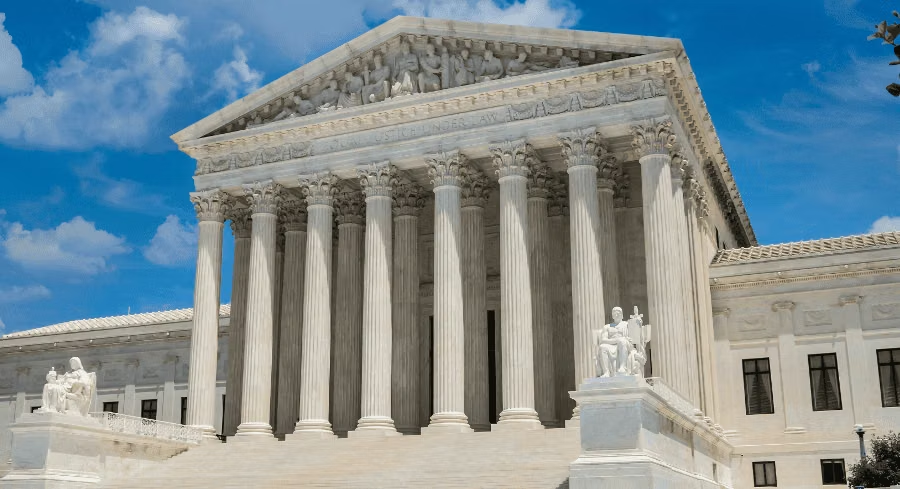
Photo: Court (File)
Clement cautioned the justices against issuing a definitive ruling on standing without formal submissions from both parties, while also noting Paramount had previously raised the issue earlier in the litigation.
Barrett pointed out that Paramount had contested standing initially in district court before abandoning the issue during appeals.
“You raised it in the district court,” Barrett said.
“We did raise it in the district court, but then dropped it before the Sixth Circuit,” Clement responded. “We did. But you know the funny thing about standing arguments, you can’t really drop them, right? So if you’re intrigued by that question, I’d be happy to provide supplemental briefing.”
Barrett observed that the nature of the transmission intersects with the case’s core merits under privacy law.
“Well, this gobbledygook also presents the question of whether it’s PII, right?” Barrett noted, referring to personally identifiable information. “If nobody can look at it and really identify, only a computer can figure out what this means.”
Clement agreed, stating that determining standing risks overlapping with the statutory dispute over whether encrypted or machine-readable strings constitute personally identifiable information. He warned that resolving standing abruptly could affect how lower courts interpret the data, urging the court to request supplemental briefs if it chooses to address jurisdiction directly.