
Rubio Targets Foreign Officials With Visa Bans For Censorship Of Americans
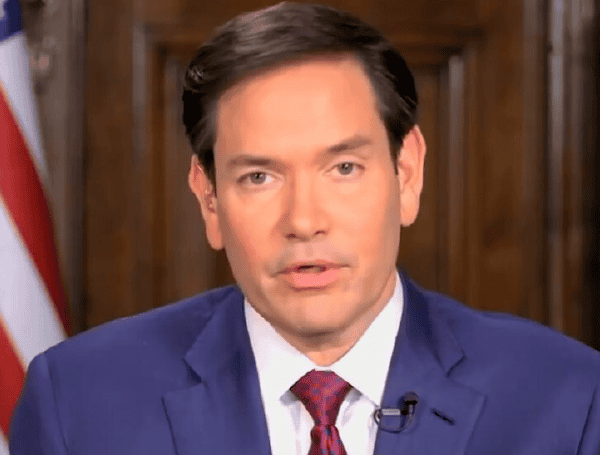
Secretary of State Marco Rubio announced Wednesday new visa restrictions targeting foreign officials and individuals deemed “complicit” in censoring American citizens, a move signaling a more aggressive stance by the Trump administration against perceived infringements on free speech.
“For too long, Americans have been fined, harassed, and even charged by foreign authorities for exercising their free speech rights,” Rubio stated in an initial post on X, formerly known as Twitter. “Today, I am announcing a new visa restriction policy that will apply to foreign officials and persons who are complicit in censoring Americans. Free speech is essential to the American way of life – a birthright over which foreign governments have no authority.”
In a subsequent detailed statement, Rubio elaborated on the administration’s rationale.
“Free speech is among the most cherished rights we enjoy as Americans. This right, legally enshrined in our constitution, has set us apart as a beacon of freedom around the world,” he said. “Even as we take action to reject censorship at home, we see troubling instances of foreign governments and foreign officials picking up the slack. In some instances, foreign officials have taken flagrant censorship actions against U.S. tech companies and U.S. citizens and residents when they have no authority to do so.”
The Secretary of State specified that the new policy “will apply to foreign nationals who are responsible for censorship of protected expression in the United States.” He described certain foreign actions as unacceptable, stating, “It is unacceptable for foreign officials to issue or threaten arrest warrants on U.S. citizens or U.S. residents for social media posts on American platforms while physically present on U.S. soil. It is similarly unacceptable for foreign officials to demand that American tech platforms adopt global content moderation policies or engage in censorship activity that reaches beyond their authority and into the United States.”
Rubio asserted, “We will not tolerate encroachments upon American sovereignty, especially when such encroachments undermine the exercise of our fundamental right to free speech.” He confirmed the visa restriction policy is pursuant to Section 212(a)(3)(C) of the Immigration and Nationality Act, which allows the Secretary of State to deem an alien inadmissible if their entry “would have potentially serious adverse foreign policy consequences for the United States.” He also noted that certain family members of targeted individuals may also be covered by these restrictions.
The Secretary of State emphasized that the privilege of travel to the United States would not be extended to those accused of undermining American rights. “Whether in Latin America, Europe, or elsewhere, the days of passive treatment for those who work to undermine the rights of Americans are over,” Rubio added in his X post.
While the U.S. has consistently condemned censorship in countries like China, Russia, Iran, and Cuba, this new policy appears to broaden the scope of concern. The Trump administration has recently voiced criticism of actions within the European Union.
Vice President JD Vance has been a vocal critic, arguing that measures like the EU’s Digital Services Act could indirectly impose European censorship standards on the U.S. by pressuring American tech companies.
During an address at the Munich Security Conference in February, Vance accused European leaders of stifling dissenting views by labeling them “misinformation” and “disinformation.” He pointed to several specific instances, including the prosecution over silent prayer outside an abortion clinic in the United Kingdom, the annulment of Romania’s 2024 presidential election results due to alleged foreign interference, the conviction of a Christian activist in Sweden for burning a Quran, and German authorities policing anti-feminist speech online.
“What I worry about is the threat from within—the retreat of Europe from some of its most fundamental values,” Vance stated at the conference.
The new visa policy underscores the administration’s commitment to protecting American expression globally and marks a significant step in its approach to international relations concerning free speech issues.
MORE ARTICLES - TAMPA FREE PRESS
- RUBIO: US To Revoke Visas Of Chinese Students With CCP Ties, Studying In Critical Fields
- Dershowitz: Trump “Flexing Muscles” Selectively, Iran Policy And Credibility Seen As Key To Presidency
- Pentagon Shake-Up: Hegseth Unleashes Directives To Cut Waste, Restore “Warrior Ethos”
- “We Did It”: Border Czar Tom Homan Puts AOC On Notice After Democrat Lawmaker Charged
- FBI Probes ‘Targeted Violence’ Against Religious Groups In Seattle Amid Rally Clash
- Trump Administration Signals Crackdown On Medicaid For Non-Citizens
- GOP Senators Pressure Trump To Sanction Russia Amid Stalled Ukraine Peace Talks
TAMPA FREE PRESS
Please make a small donation to the Tampa Free Press to help sustain independent journalism. Your contribution enables us to continue delivering high-quality, local, and national news coverage.
Android Users: Download our free app to stay up-to-date on the latest news.
Connect with us: Follow the Tampa Free Press on Facebook and Twitter for breaking news and updates.
Sign up: Subscribe to our free newsletter for a curated selection of top stories delivered straight to your inbox.