

High Voltage Al In Florida: The Multi-Billion Dollar Battle For America's Power Grid
The race for artificial intelligence dominance has collided with the physical limits of America's power grid, sparking a high-stakes economic battle between the Trump White House and Florida's Republican leadership over who will foot the bill for the energy revolution.
While President Donald Trump pushes for a federal "one rulebook" to fast-track Al data centers, Florida Governor Ron Desantis and gubernatorial candidate James Fishback are drawing a line in the sand, warning that the massive energy appetite of these facilities threatens to spike utility rates for ordinary families.
The Gigawatt Gamble
At the heart of the dispute is the staggering amount of electricity required to power the next generation of Al. These are not typical warehouses; they are industrial-scale energy consumers. According to the Electric Power Research Institute, a single query to a generative Al model consumes roughly ten times the electricity of a standard Google search.
The aggregate demand is reshaping the U.S. energy landscape. In 2023, data centers consumed an estimated 176 terawatt-hours-about 4.4% of the nation's total electricity. Goldman Sachs projects that demand will skyrocket by 160% by 2030, with some estimates suggesting Al could eventually devour up to 12% of the entire U.S. power supply.
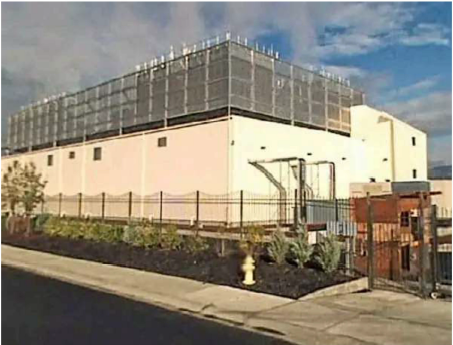 Google Datacenter
This surge is already straining grids. A single large data center campus can draw as much power as 750,000 homes. In states like Georgia and Tennessee, grid operators have been forced to revise load forecasts upward, keeping aging fossil-fuel plants online and necessitating expensive new infrastructure-costs that critics argue are often passed down to residential ratepayers.
The Economic Fallout
It is this economic threat that has mobilized Florida's GOP against the President's deregulatory push.
"We will block any Al data centers that would drive up our electric bills," Fishback declared on X this week. He points to rising rates in other states as a warning, arguing that without state-level intervention, Florida families will effectively subsidize Silicon Valley's expansion. "Our state-not the tech bros-decides what gets built on our soil."
Governor Desantis echoed these concerns in his proposed "Al Bill of Rights," unveiled Thursday. The plan explicitly seeks to shield consumers by prohibiting state utilities from charging residents for the backend infrastructure needed to support private data centers. It also bans taxpayer subsidies for Big Tech, a direct rejection of the incentives often used to lure these massive facilities.
Conflicting Forecasts
The economic reality, however, is a subject of fierce debate among experts. While the Energy Information Administration (EIA) has warned that high demand from data centers and cryptocurrency mining puts upward pressure on electricity prices, others argue the opposite effect is possible.
A widely cited October study from the Lawrence Berkeley National Laboratory suggests that regions with dense data center activity could actually see lower prices. The theory is that as utilities spread their fixed costs across these massive new industrial customers, the unit cost for everyone else goes down.
Department of Energy Secretary Chris Wright supports this view, stating previously that producing more electricity for Al will ultimately drive efficiency and bring costs down for the consumer.
The Political Circuit Breaker
Despite these economic arguments, the political friction is intensifying. President Trump, viewing Al as a critical national security race, announced Monday he would sign an executive order to "facilitate the rapid and efficient buildout" of infrastructure, blasting state-level regulations as obstacles that could let foreign adversaries pull ahead.
"We are beating ALL COUNTRIES at this point in the race, but that won't last long if we are going to have 50 States ... involved in RULES and the APPROVAL PROCESS," Trump wrote.
Desantis remains skeptical of the federal government's ability to override state economics, noting on social media that "Congress hasn't proposed any coherent regulatory scheme."
As the administration prepares to issue its orders, the conflict in Florida serves as a microcosm for a national dilemma: Can the U.S. win the Al arms race without breaking the bank for American households?
TAMPA FREE PRESS
Please make a small donation to the Tampa Free Press to help sustain independent journalism. Your contribution enables us to continue delivering high-quality, local, and national news coverage.
Android Users: Download our free app to stay up-to-date on the latest news.
Connect with us: Follow the Tampa Free Press on Facebook and Twitter for breaking news and updates.
Sign up: Subscribe to our free newsletter for a curated selection of top stories delivered straight to your inbox.