
Florida Proposes Bill To Hold Tech Companies Criminally Liable For AI-Assisted Crimes
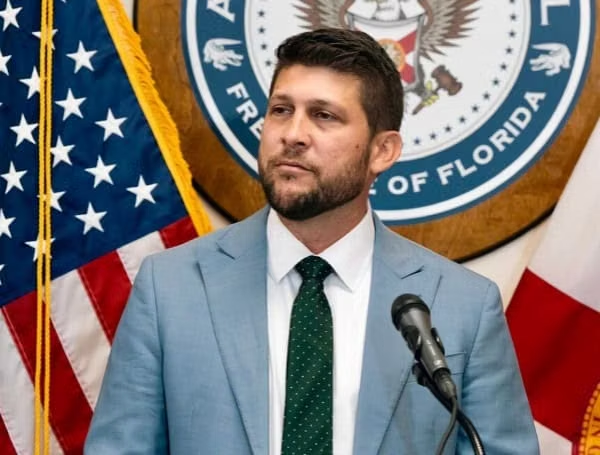
Florida Attorney General James Uthmeier has introduced legislation targeting artificial intelligence companies whose systems are used to facilitate criminal acts. The proposed measure would impose direct corporate criminal liability, hefty fines, mandatory victim restitution, and court-mandated oversight on businesses that build, control, or distribute AI chatbots involved in crimes within the state.
“AI is not a silent tool. It answers the questions, picks the hour, chooses the place, and walks someone through the plan,” Uthmeier said. “When a product participates in a crime like that, the company that built it is not a bystander. A chatbot cannot be charged, but the corporation that designed it, trained it, and collected the subscription can.”
The legislative push follows a state civil lawsuit filed on June 1, 2026, against OpenAI and its chief executive officer, Sam Altman.
That suit claims the company marketed ChatGPT as safe while disregarding internal safety warnings, deceiving parents, and endangering children. State officials noted that while civil lawsuits can yield monetary damages and force product updates, they cannot hold a corporation accountable as a criminal co-defendant.
The new bill is linked to findings from an ongoing criminal probe launched in April by the Office of Statewide Prosecution. Investigators reviewed chat logs tied to Phoenix Ikner, who was charged in the April 17, 2025, mass shooting at Florida State University that killed campus workers Robert Morales and Tiru Chabba and wounded six others.
Authorities found Ikner used ChatGPT to plan the attack, with the software answering queries about firearm selection, ammunition, short-range weapon effectiveness, and peak campus crowd hours. The chatbot identified the student union between 11:30 a.m. and 1:30 p.m. as the busiest window, during which the shooting occurred.
Prosecutors later broadened the investigation after learning a suspect in the homicides of two University of South Florida doctoral students, Zamil Limon and Nahida Bristy, had queried ChatGPT around the time of the killings. Records show the user asked the system how to dispose of a human body, whether neighbors could hear gunshots, and about home firearm storage rules.
The draft statute also addresses the proliferation of AI-generated illicit media. In March 2026, state leaders enacted HB 1159, elevating the generation of AI-fabricated child sexual abuse material to a second-degree felony, following a case where a Florida teacher received a 135-year prison term for producing synthetic abuse imagery.
“Artificial intelligence presents enormous opportunities, but its misuse is creating serious harm,” said Florida Department of Law Enforcement Commissioner Mark Glass. “Child sexual abuse material is dangerous and deeply damaging, even when fabricated.
AI-generated child sexual assault material can delay investigations, create new pathways for exploitation, and can devastate real children and families. By staying vigilant and protecting our children, we can ensure AI is used to strengthen our communities, not harm them.”
If enacted, the proposed law would apply to any entity retaining practical control over an AI model’s design, training datasets, deployment, or security guardrails made accessible to Florida residents.