
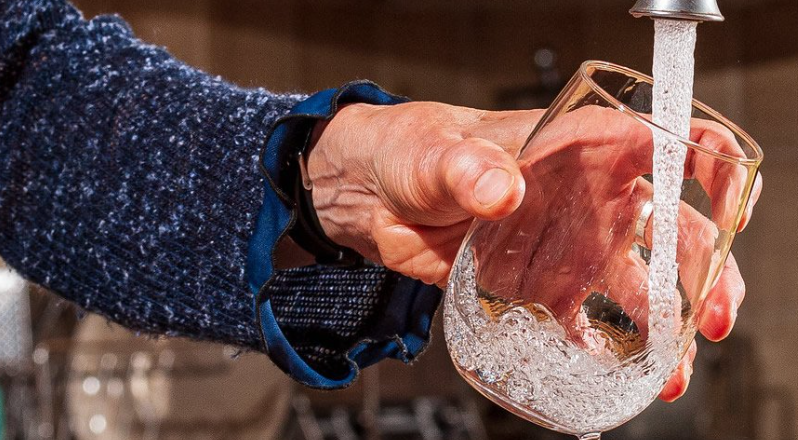
EPA redesignates Detroit area to “attainment”, partners with HHS to combat microplastics
EPA redesignates Detroit area to “attainment” for sulfur dioxide; area now meets national air quality standards
Cleaner air for Detroit as sulfur dioxide levels drop more than 57% over 15 years
Contact Information Macy Pressley (pressley.macy@epa.gov) 312-886-1443U.S. Environmental Protection Agency (EPA) is announcing the redesignation of the Detroit area to “attainment” for sulfur dioxide emissions after air monitoring shows the region meets the national health-based standard.
“Reducing sulfur dioxide emissions protects Michigander families, and redesignating the area supports economic development,” said EPA Regional Administrator Anne Vogel. “Paving the way for a healthy and thriving Detroit would not have been possible without EPA’s strong partnership with state and industry leaders.”
In 2013, EPA designated the Detroit area as “nonattainment” for the sulfur dioxide standard because readings were above the health-based limit. Since then, Michigan EGLE has worked with sources in the area to reduce levels in the air. Significant emission controls at facilities including U.S. Steel, EES Coke Battery, and Dearborn Industrial Generation resulted in a reduction of more than 57% of airborne sulfur dioxide. As a result, the area now meets EPA’s clean air standards.
With this redesignation, air permitting will be faster and more predictable while strong health protections will remain in place. Existing emission controls and monitoring will continue to ensure air quality remains healthy. If monitored levels approach or exceed the health-based standard, Michigan must act quickly to address the situation.
To learn more about sulfur dioxide and the National Ambient Air Quality Standards, visit EPA’s website.
EPA, HHS Announce Historic Actions to Protect Americans from Microplastics and Safeguard Drinking Water
Joint initiative marks first-ever inclusion of microplastics on EPA's Contaminant Candidate List and launches groundbreaking ARPA-H program to detect and remove plastics from the human body
Contact Information EPA Press Office (press@epa.gov)WASHINGTON – U.S. Environmental Protection Agency (EPA) Administrator Lee Zeldin and U.S. Department of Health and Human Services (HHS) Secretary Robert F. Kennedy Jr. today announced landmark, coordinated actions to address microplastics contamination, one of the most urgent and growing public health challenges facing Americans. The announcements, made at a press conference at EPA headquarters, represent a major step forward in President Trump's commitment to Make America Healthy Again.
For the first time in the program's history, EPA is including microplastics as a priority contaminant group in its draft Sixth Contaminant Candidate List (CCL 6), now open for public comment. CCL 6 also includes pharmaceuticals as a group—another first—along with per- and polyfluoroalkyl substances (PFAS), disinfection byproducts, 75 individual chemicals, and nine microbes that may be present in public drinking water systems.
The CCL is a critical tool under the Safe Drinking Water Act (SDWA) that drives research, funding, and future decisions on regulating emerging threats to drinking water. By elevating microplastics and pharmaceuticals to priority group status, EPA is directly responding to the concerns of millions of Americans who have long demanded greater transparency and accountability about what is in their water.
Additionally, the Advanced Research Projects Agency for Health (ARPA-H) announced the launch of STOMP—Systematic Targeting of Microplastics—a first-of-its-kind nationwide initiative to build a comprehensive toolbox for measuring, researching, and removing microplastics and nanoplastics (MNPs) from the human body. STOMP takes a three-pronged approach:
-
Measure: Deploy gold-standard detection technology to accurately quantify microplastics levels in water and human tissue.
-
Target: Identify the most harmful plastic contaminants and determine how they enter and move through the body.
-
Remove: Develop and validate methods to eliminate microplastics from the human body.
Together, these two initiatives represent the most comprehensive federal effort to date to understand and combat the risks posed by microplastics to public health.
"For too long, Americans have vocalized concerns about plastics and pharmaceuticals in their drinking water. That ends today,” said EPA Administrator Lee Zeldin. “By placing microplastics and pharmaceuticals on the Contaminant Candidate List for the first time ever, EPA is sending a clear message: we will follow the science, we will pursue answers, and we will hold ourselves to the highest standards to protect the health of every American family.”
“Today, HHS and EPA are taking decisive action to confront microplastics as a growing threat to human health,” said HHS Secretary Robert F. Kennedy, Jr. “Americans deserve clear answers about how microplastics in their bodies affect their health. Through ARPA-H’s STOMP program, we will measure microplastic exposure, identify sources of risk, and develop targeted solutions to reduce it.”
The announcements were unveiled at EPA headquarters in Washington, D.C., where Administrator Zeldin and Secretary Kennedy were joined by senior agency officials for a press conference before the public. The press conference was followed by an expert panel discussion examining the scope of microplastics and pharmaceutical contamination in America’s drinking water and the real-world impact of today's actions.
Panelists included EPA Assistant Administrator for the Office of Water Jessica Kramer; ARPA-H Director Dr. Alicia Jackson; leading microplastics researcher Dr. Marcus Eriksen; scientist Matthew Campen, whose research has documented the presence of microplastics in human tissue; Leonardo Trasande, an internationally renowned leader in environmental health whose research focuses on identifying the role of environmental exposures in childhood obesity and cardiovascular risks; and Colleen Flaherty, Division Director in EPA’s Office of Water where she leads initiatives to understand and reduce microplastic pollution in the nation’s waterways.
Background
The CCL is published every five years under the SDWA and guides EPA's research priorities, funding decisions, and regulatory agenda for substances not yet subject to national drinking water standards. Inclusion on the CCL does not constitute regulation, but signals that a substance warrants serious scientific attention and may be considered for future regulatory action.